































When we live to serve others our impact can be far reaching, whether we realize it or not. The power of women coming together is recognized through uplifting results. Strategic moves and heartfelt action are an excellent recipe for effecting change the world needs.
There are two women who are breaking barriers and overcoming obstacles to educate, and provide economic empowerment, and aftercare to survivors, who lived through horrific ordeals. Monica Griffin and Jill Langhus-Griffin are using their own stories to ignite a fire for safety and awareness when it comes to human trafficking.
Monica’s Story
From the outside, Monica Griffin’s childhood looked like privilege. She grew up in an upper-class Southern family surrounded by country clubs, material abundance, and high expectations. But behind the polished exterior was a young girl who often felt alone.
“Growing up in the South, there was an unspoken expectation to look the part and carry yourself a certain way,” Monica said. “From the outside, I had everything I needed, but internally, I was still trying to understand where I belonged.”
At 11 years old, Monica lost her father, one of the defining losses of her childhood. She remembers her parents’ marriage as loving and strong, something that would later influence what she wanted her own daughter to understand about healthy love.
In her twenties, Monica left college to pursue what appeared to be a dream opportunity in the entertainment industry. Instead, that opportunity became an entrance into exploitation and human trafficking.
Her experience included sexual exploitation involving fetishized violence and acts used as mechanisms of control and profit. Eventually, Monica became severely malnourished and physically depleted. During this period, her appendix ruptured, resulting in a hospitalization that brought the severity of her physical condition into focus.
Today, Monica speaks about those experiences not for their shock value, but because they challenge assumptions about who can become vulnerable to trafficking.
“Trafficking doesn’t have one face,” Monica said. “You can come from privilege, have an education, look put together, and still become vulnerable to someone who understands how to exploit what you are searching for.”
Motherhood became a defining turning point. When Monica became pregnant with her now 9-year-old daughter, she began looking differently at the future.
“My daughter was my reason for going back to school,” Monica said. “Everything is for my daughter. It became about breaking generational cycles and creating something different for the generation after me.”
That commitment eventually extended far beyond her own family.
Over the years, Monica transformed lived experience into survivor advocacy, nonprofit leadership, mentoring, public speaking, and anti-trafficking education. Her work has included helping educate the hospitality industry about recognizing trafficking and supporting survivors as they rebuild their lives.
“It is a gift that I can put my own trauma aside and listen to another woman,” Monica said. “Advocacy isn’t about speaking for survivors. It is about creating enough safety and space for them to find their own voice.”
In September 2022, Monica connected with Jill Langhus-Griffin, founder of Liluye, a nonprofit empowering women affected by human trafficking. Monica later joined the organization as Chief Operating Officer and a board member in December 2024.
“Jill is a tank. She won’t stop pursuing her vision,” Monica said. “She works from an ‘every story matters’ approach and has an incredible energy for bringing women together.”
For Monica, however, survivor advocacy has increasingly meant looking beyond rescue and asking what happens next.
Survivors may still face financial instability, employment barriers, family challenges, complicated legal systems, and the difficult work of rebuilding trust and self-worth. Monica’s work has focused on that space after survival—helping women move toward confidence, independence, and sustainable futures.
That experience ultimately helped lead her toward the legal profession.
In 2026, Monica pursued intensive paralegal studies through Boston University, seeing legal education not as a departure from advocacy, but as another tool for it.
“I want women to understand their rights and know they have someone willing to stand beside them while they navigate systems that can feel impossible,” Monica said.
Her message after years of survivor advocacy remains simple, “I never want a woman to feel like she does not deserve to be seen.”
Monica also encourages awareness in an increasingly digital world. “Be cautious on social media. Take the time to know who is watching—not for ego, but for awareness.”
Monica no longer tells her story simply because of what happened to her. She tells it because another woman may still be living somewhere inside a chapter she survived.
For Monica, healing has meant reclaiming the authorship of her own life—and helping other women recognize that they can do the same.
“The past we escaped is the future we are building.”
Her story is not simply about what was done to her.
It is about what she chose to build afterward.
Jill’s Story
If Monica Griffin’s story demonstrates what can be built after survival, Jill Langhus-Griffin’s story asks a complementary question: What would it look like to build communities where women have the resources, connection, and opportunity to thrive?
Before founding Liluye, Jill built a career as a graphic designer in the corporate world. But she increasingly felt disconnected from work that did not align with the deeper sense of purpose she carried.
“I wanted to be a social worker, but I am an empath and that would have killed me,” Jill said of her early desire to serve others. She ultimately described corporate life as “soul sucking”, successful on paper, perhaps, but disconnected from the work she felt called to do.
In 2015, Jill and her husband moved to Spain. There, she began mentoring women, listening to their experiences, and intentionally creating spaces where they could feel heard and validated.
“I was inspired and wanted to help people thrive,” Jill said.
That word—thrive—would eventually become central to her philosophy.
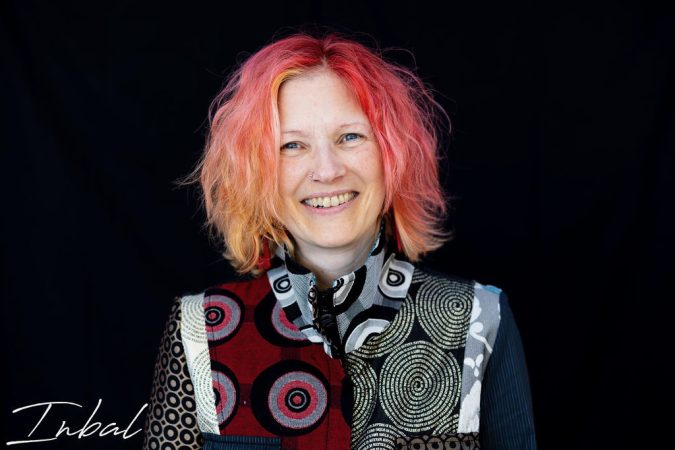 Jill’s own experiences with abuse and trauma shaped the empathy she brought to this work, but connecting with women through World Pulse helped expand her understanding of how violence and exploitation affect women across cultures and borders.
One story in particular stayed with her.
“When I joined World Pulse, I was commenting, giving support and feedback on the stories there, but the one that stood out the most was Awah’s trafficking story, as it resonated with me deeply from my own history of abuse and trauma,” Jill said. “There is no greater disservice to humanity than to have someone repeatedly violated, abused and traumatized in this way.”
That connection became part of the catalyst for what would eventually become Liluye.
Building Beyond Survival
Jill created Liluye as a global community focused on empowering people impacted by human trafficking, as well as those vulnerable to exploitation. Rather than focusing primarily on rescue operations, Liluye’s work addresses the broader ecosystem surrounding trafficking: prevention, economic empowerment, healing, community, and long-term rebuilding.
Its prevention work includes education around gender-based violence, toxic masculinity, and other conditions that can increase vulnerability to exploitation.
Economic empowerment is equally important. Through mentorship, career development, financial literacy, skill building, and community support, Liluye works to address one of the realities survivors can face after exploitation: freedom without sustainable resources can leave someone vulnerable all over again.
Aftercare focuses on another part of the journey that is often overlooked—the long process of rebuilding physical, emotional, and spiritual well-being.
Liluye connects survivors with resources, mentorship, community, and healing practices that may include meditation, yoga, and other trauma-informed approaches to reducing stress and supporting overall wellness.
For Jill, the goal extends beyond helping someone leave exploitation.
It is helping survivors, “regain power, autonomy, physical health, happiness, stability, and community,” she said, so they can move beyond surviving and begin rebuilding their lives.
It is a philosophy that closely aligns with Monica’s own belief that survivor advocacy must eventually answer the question: What happens next?
A Global Vision
Jill’s vision for Liluye continues to expand.
In the near future, Jill is working toward achieving several worthy goals:
1.) She would like to implement skills workshops that would extend education in promoting financial independence. This is crucial for survivors and wants to focus priority on the sex trafficking survivors. Jill would also love to provide educational opportunities through community workshops on labor trafficking, barring she could acquire adequate resources for that.
2.) Creating more connections with the American Indigenous peoples, working to collaborate on skill building, economic empowerment, and aftercare as indigenous survivors are highly targeted and marginalized. “I love their rich tapestry and culture,” said Jill.
3.) Creating a global community program for survivors to come together. Jill and survivors alike are expressing desire for this type of community to be formed for mentorship, community building, and support.
The idea is not to build something for survivors without their voices.
It is to build alongside them.
That distinction is central to the work Jill and Monica share.
Their paths to advocacy are different. Monica brings the perspective of lived experience with trafficking and years of survivor-centered advocacy. Jill brings a founder’s vision for building connections, resources, and infrastructure across communities. Together, their work reflects a broader shift in the conversation surrounding human trafficking—from focusing solely on rescue to asking what survivors need to build sustainable lives afterward.
Both women also use platforms such as World Pulse to amplify women’s voices and connect with advocates around the world. World Pulse is an online global network designed to create space for women to share their experiences, advocate for change, and build community.
For Jill, Liluye is an extension of that same belief: every story matters, but survivors deserve more than a platform for telling what happened to them.
They deserve opportunities to determine what happens next.
Through Liluye, Jill continues working toward a global community where survivors can access knowledge, resources, mentorship, economic opportunities, healing support, and—perhaps most importantly—the understanding that rebuilding does not have to happen alone.
In addition to all the contributions being made by both Monica and Jill, they also spread awareness through their membership with World Pulse and other platforms.
World Pulse creates space through their online network to allow for women’s voices to be heard on a wide range of topics and issues. You can learn more about their mission and impactful work by visiting their website at worldpulse.org.
As you navigate through the website you can read blogs regarding Monica’s stories in addition to partner story features within the sector. Messages of encouragement and hope for survivors are found within these blogs.
To learn more about Liluye, its programs, survivor stories, partnerships, and resources, visit liluye.org or contact info@liluye.org.